


Excuse Me, Can We Rethink How We Use the Term "Hand-Made"?

Ok, I’ve been thinking about how to phrase that title for a little while now. I don’t want to create the wrong impression or scare people away (this is a small, new blog after all.) This is coming from a place of non-judgment! I know as well as anyone how murky it can be to navigate the fashion industry as a consumer, and I am by no means a perfect portrayal of ethical purchasing. I’ve bought from fast fashion brands before I knew better, and when I thought I didn’t have any other option because of my financial situation. I’ve certainly been ignorant to garment factory practices and definitely still have a lot to learn. We’re all just doing our best out here, and I’m sharing this in the hopes that it might ignite conversation, not shame.
I also love locally produced, ethical, sustainable fashion. I love making things myself and learning to truly appreciate craftsmanship. I think it’s so, so important to be mindful of where our clothes and all of our things are coming from, what processes are creating them, and who benefits from our purchases. That’s exactly why I wanted to write this post, actually.

However, I’ve noticed it’s become much more common, for boutique fashion and crafts in particular, to refer to themselves as “hand-made.” This term seems to be around every corner, of the internet, of local markets, on a particular online selling platform that champions such items specifically…it. is. everywhere. Meaning, I’ve had lots of chances to interact with and ponder over it. I’m still not sure that my current assessment will remain my opinion forever, but I figure it’s at least worth drawing attention to this topic, to start a conversation.
It's not so much that I have a specific qualm with the term “hand-made,” but the way we currently use it gives me pause.
You see, I think at some point along the way, “hand-made” has evolved in our cultural vocabulary to equate with slowly made, ethically made, and creator owned. In reality, I think we’ve lost an awareness of how the vast majority of garments (and let's face it, most retail products) are made, whether that’s in a factory with dismal working conditions or in a business owner’s private sewing studio. That’s to say, as tricky as it may be to internalize:
At scale, the vast majority of garments you can find today are made with human hands, human input, and human labor.
That’s the part I really want to scream from the rooftops like I’m Mariah Carey at Christmas time. When I see or hear someone refer to a clothing business, or anything really, as hand-made, I think about how ~99% of the time, all clothes are hand-made! They’re just not usually made with sustainable or humane practices!

Garment production, at scale, simply hasn’t advanced to a point that a piece of clothing can be produced without human hands actually operating a sewing machine, sewing on trims and buttons, or even cutting out fabric and other materials (I won’t be getting into machine knitting or crochet here, that’s for another day and I simply need to learn more about these art forms.) Sure, some of those processes might be assisted by machinery, and we might have industrial sewing, cutting, and embroidery machines…but those production methods still very much rely, often heavily, on meticulous, tiring, skilled human labor that is too often underpaid or not paid at all.
We must stop ignoring this harsh reality of so many retail industries -- especially fashion.
For all my readers here who have ever sat down at a sewing machine, or made anything yourself, I’m sure you’re familiar with how much work and practice goes into producing something. That’s why most people who fall in love with a hobby like sewing never decide to make a business out of it. Because it is hard. It is time consuming. Your work and time will almost always end up being undervalued in a competitive market, unless you get really, really lucky after working very, very hard. It’s simply not an easy career path or even a particularly viable side hustle.

With this in mind, I think the fact that the concept of “hand-made” is making its way into our cultural narrative, especially around garment consumption, is fantastic. It’s a sign that we’re starting to think more about how much work goes into a single piece of clothing, accessory, or art piece, at least at the local level. I don’t want this progress to be snuffed out by semantics.
However,
We can’t lose nuance in this conversation, either. Part of why it’s so difficult for creators to achieve fair pay and a viable business model is exactly because of how much human labor is exploited in this industry. The two are undeniably intertwined -- circular, even -- and this can be attributed to the fact that many, many human experiences of exploitation, especially in the global south, have been normalized and unexamined for way. too. long.
You see, if these human beings producing garments for a few dollars (or less) per day were actually paid fairly, and under sustainable, healthy conditions, it would no longer be viable for large fashion businesses to sell these items for so much less than they’re worth. Heck, it wouldn’t be viable for these companies to produce at the gargantuan scale that they’ve operated at for decades. The way we produce, consume, and interact with fashion would likely be very, very different.
Let’s do some math.
Estimated math, that is! Maybe a discount brand is willing to take a risk on a garment that they’re producing 100 times per day for $5 each, selling for less than $20, and retaining 80 percent of the profits after admin costs (maybe about $12 in profit) while paying workers about $1 per garment….again, these are estimates, based on what I've read about a few fast-fashion businesses (source). But, humor me here: what does that look like when production costs suddenly rise to $40, $80, $100?

Even for a very advanced sewist, producing a very simple garment might take at least an hour, and simple garments aren’t usually what consumers are looking for. So, let’s say an average performing product might take, at minimum, about 3 hours to make for a skilled employee (source). If that skilled worker is getting paid just the equivalent of a living wage in the US – let’s give it a conservative $15/hour – that’s a labor cost of at least $45 per garment, and that’s not even counting materials and administrative costs.
Now, if we add on that materials cost – let’s say about $15 for 3 yards of fabric at a discounted wholesale cost (source) and maybe a couple notions – then at least 10% for administrative labor and fees, about $6, we’re looking at an overall production cost of $66. That’s over three times the final price that many have become accustomed to paying for a garment in retail in production costs alone.
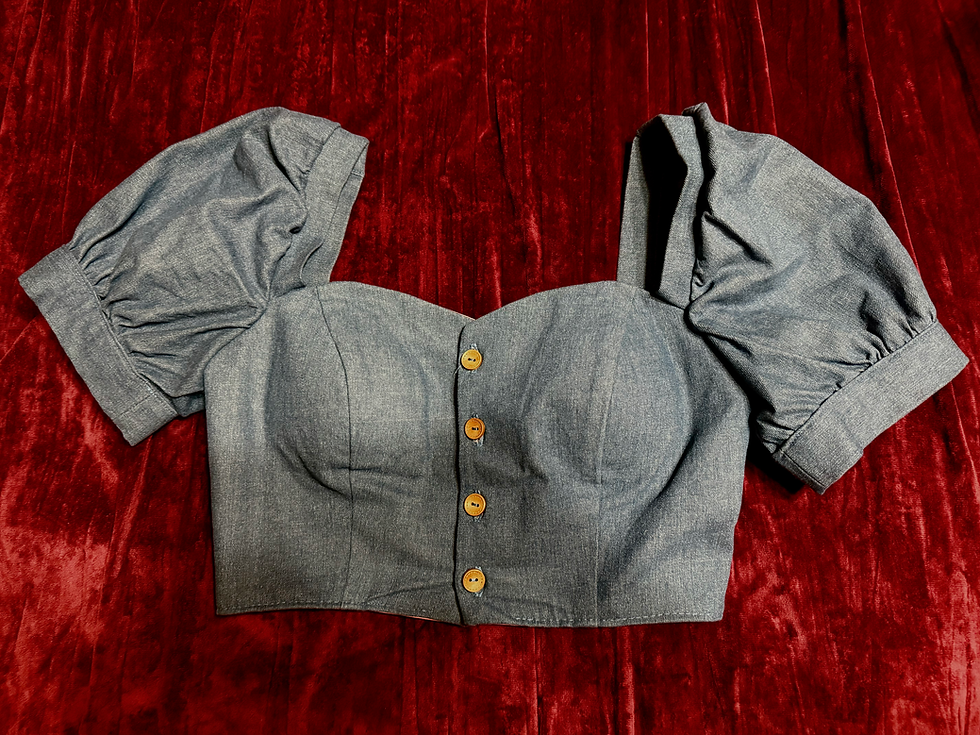
The final price, of course, needs to allow for a profit, which is usually suggested to be between 30% - 60% of the final sale before expenses (source) – so, conservatively, we’re looking at about a $100 price tag. For an average garment. Think a very simple sun dress, top, or loose-fitting pants.
To all my sewists here: what garments are you able to make, from cutting to final touches, within 3 hours?
...and what is the lowest price you would be willing to sell them for?
Also, from a business perspective, now the risk looks a little different with these higher(insert:ethical) production costs, right? Suddenly, a product that might flop at scale (say 100 units,) goes from being a potential loss/gain of $800/$1200 with a seedy factory model to $6600/$3400 with a basic living-wage model.
Again, these are estimates based on my experiences as a consumer, as a hobby sewist, and with a few hours of research online (which can never replace real expertise!) I am by no means a professional in fashion industry finance, but…. that flip in the relationship between potential loss and potential profits seems important, especially when you’re an ethically minded small business owner who doesn’t happen to have access to a trust fund.
A little side-by-side comparison, for my visual thinkers:
Factory Production Model:
Production Costs: $5
Labor: $1
Materials: $4
Admin Costs: $3
Total Costs: $8
Garment Price: $20
Profit: $20 - $8 = $12
Potential Profit on 100 units: $1200
Potential Loss on 100 units: $800
Potential profit to loss ratio: 1.5:1
Ethical Business Model:
Production Costs: $60
Labor: $45
Materials: $15
Admin Costs: $6
Total Costs: $66
Garment Price: $100
Profit: $100 - $66 = $34
Potential Profit on 100 units: $3400
Potential Loss on 100 units: $6600
Potential profit to loss ratio: 0.52:1
*That means: under the ethical model, your potential for profit is about half your potential for loss, and your profit potential relative to loss potential is about 3 times less than the same relative potential for the factory model. Basically, you’re fighting an uphill battle against a giant with better armor, and a legal team.
And that’s exactly why it’s so hard for independent fashion businesses that focus on ethical and sustainable practices to make it in this current market. The average person simply is not accustomed to paying $100+ for a simple top, dress, or pants – and $100 still doesn’t allow for a terribly comfortable profit margin. Most average shoppers would experience intense sticker shock and possibly even become angry at the suggestion that they ought to pay half a day’s work (or more) for a piece of clothing that they’d typically find for $20 (maybe 1.5 hours of work) or less at their favorite discount store.
And let’s get ahead of it: there are only so many luxury shoppers, which is who many boutique businesses currently have to market to if they’re going to stay afloat. But most purchases are made by average shoppers, so what does that look like for the fashion industry as a whole?
Hint: the factory model relies on large, continuous purchase volume to thrive…not quality or ethics
Sure, the TJ Maxx version might not be finished as cleanly, the fabric may be cheaper, and it may last for less time, but that’s the garment most people are used to budgeting for. We’re not even talking about a fitted jacket, a hand-finished quilted coat, or a detailed evening dress – we’re talking $100 for a button down. a polyester bias cut dress. a pajama set. Does it even sound a bit steep to you, too?

The Real Price
I think that’s what we need to really examine, and why the term “hand-made” really needs to be used more thoughtfully and with more reverence for the reality that many garment workers experience. No shade to my independent artisans and creators out there -- your work is hand-made. It is valuable. It is deserving of respect and dignity. It's just that, so is the labor of humans everywhere.
"Injustice anywhere is a threat to justice everywhere. We are caught in an inescapable network of mutuality, tied in a single garment of destiny. Whatever affects one directly, affects all indirectly." -- Dr. Martin Luther King Jr.
I think we need to become a little more accustomed to paying fair (if comparatively high) prices for garments less often, and a lot more angry and proactive about the reality of the garment and retail industries. I think we can – and should – distinguish between independently owned, ethically produced, fairly paid, and factory made, but we ought never forget:
Factory made is hand-made – it’s just made by hands that many consumers don’t ever see.
We should absolutely buy from independent and ethical brands as often as we can. We should thrift, repurpose, and challenge ourselves to at least learn what goes into making a garment. We should develop a greater appreciation for and awareness of craftsmanship.
But maybe, also, we should truly challenge ourselves to change how we think about buying and where our money ought to go. After all, if this system is going to change for the better, the vast majority of consumers have to change our purchasing behavior, rather than just think and talk about it. We have to render that factory model unviable. This simply will not disappear on its own unless it ceases to appeal as a business prospect.
As frustrating and disheartening as that may feel for the average consumer, we do have power in this situation, and I would argue that we have an obligation to do what we can. Maybe that means less purchasing (and saving for purchases that align with your values), more conscious spending, and more educating ourselves and others about these industries that we inevitably participate in, so we can participate a little better.

One form of participation that I’m challenging myself to? Finding ways to push back against unethical garment factory practices! That can look like a lot of different things, such as getting politically involved, sharing what you know with your friends, contributing to organizations that focus on this work, making a few of your own garments if you're inclined, buying less, etc. I think that whatever way you can challenge this system, no matter how simple, is important and worth doing.
I’ve put together a (preliminary) list of orgs that fight for garment worker rights and ethical industry practices. This is definitely not exhaustive and is open to updates! See below and please share in the comments if you have additions for me!
Garment Worker Rights Organizations:
works to improve working conditions in the garment industry by providing education and resources for workers, tools and roadmaps for industry stakeholders, and defined review practices; places special focus on protections against gender-based violence in the garment industry
unites global organizations to push for living wages and safe working conditions in the garment industry; supports worker unions and works for measures such as secure work contracts and discrimination protections
works to create solidarity between garment workers and consumers by promoting more transparent workplace and production practices by fashion brands; advocates for living wages and highlights inconsistencies in what brands claim vs what they actually produce
focuses on influencing brands and retailers to engage in more ethical practices through customer pressure; campaigns to raise consumer awareness of industry practices
fights to reduce human and environmental costs of the fashion industry, especially cotton production; works to raise public awareness of forced labor in the cotton industry
UK based clothing resale initiative that works to enhance access to secondhand garments and funds global projects for more ethical industry practices
I would also like to shout out a couple of ethical, sustainable fashion brands that I personally love:
Altar PDX - a brand in itself that also helps you shop more ethically
Until next time,

Comments